
Awareness and Action
Q & A
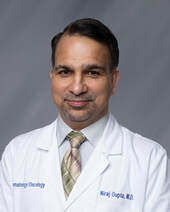
A Conversation with Niraj Gupta, MD
This month, we are sharing insight from Niraj Gupta, MD, Medical Oncologist and Hematologist with Franciscan Physician Network Oncology & Hematology Specialists in Carmel. As a cancer specialist, he guides patients through breast cancer and other cancer diagnoses, helping them understand their condition and choose the right treatment path.

|
Q: Over the past several years, how have breast cancer screenings, treatments and outcomes advanced, and what are you most encouraged by?
A: Screening has come a long way. With newer tools like 3D mammograms and artificial intelligence, we’re able to catch cancers earlier—even in women with dense breast tissue. For most women, the recommendation is a yearly mammogram starting at age 40, but we can tailor screening to each woman’s personal risk. Treatment is also far more individualized now. Instead of a “one-size-fits-all” approach, we look at the cancer’s genetic makeup and choose therapies designed to target it directly. Immunotherapies are offering hope for more aggressive cancers. Thanks to these advances, the five-year survival rate for early-stage breast cancer is now over 90%. What excites me most is being able to match the right treatment to the right person—helping women live longer and feel better during their journey. Q: What recommendations do you give women when it comes to prevention and early detection? A: The most important step is to start annual mammograms at age 40, or earlier if you have a family history. Mammograms can spot cancer years before a lump can be felt. It’s also important to know what’s normal for your body. If you notice changes in your breasts, don’t ignore them. And make sure to schedule a yearly check-up with your primary doctor or gynecologist. Q: What are some of the most common misconceptions about breast cancer that you’d like to clear up? A: A lot of women believe breast cancer is mostly inherited, but only about 5 to 10 percent of cases are caused by genetic mutations. Having a mom or sister with breast cancer doesn’t mean you’ll definitely get it. We all have BRCA1 and BRCA2 genes, which normally help repair DNA. But when those genes are mutated, they increase the risk of breast and ovarian cancer. If you’re worried about your risk, talk with your provider. At Franciscan, we offer genetic counseling, testing, and even a high-risk clinic to guide women with elevated risk. Q: How important is community support—both inside the hospital and beyond—for patients and their families? A: It’s absolutely vital. A cancer diagnosis isn’t just about the body. It affects your mind and spirit, too. At Franciscan, we surround patients with care through support groups, survivorship programs, assistance services and spiritual care. Just as important, family and friends provide comfort in everyday ways, like making meals, giving rides or simply being there to listen. That kind of support makes a tremendous difference. |
Q: Looking ahead, what developments in research or treatment give you the most hope?
A: I’m very hopeful about new ways to detect breast cancer earlier. Artificial intelligence is helping radiologists find even the smallest changes on mammograms, and blood tests may one day be able to flag cancer before symptoms appear. Treatments are also becoming more precise, attacking cancer cells while protecting healthy ones. And perhaps most importantly, there’s a growing focus on making these advances accessible to everyone, no matter where they live or their background. Q: Is there anything else you’d like our readers to know? A: Yes—know what’s normal for your body and don’t wait for Breast Cancer Awareness Month to pay attention to your health. Annual mammograms are key, but so is listening to your body. Partner with your healthcare team, stay proactive, and remember—you don’t have to face these concerns alone. Dr. Gupta’s work is highly collaborative, drawing on a multidisciplinary team of radiologists, breast surgeons, radiation oncologists, plastic surgeons and genetic counselors. That same team approach is available to every patient at Franciscan Physician Network Oncology & Hematology Specialists in Carmel, where comprehensive, personalized cancer care is just a call away. Learn more about breast cancer and take a breast cancer health risk assessment at FranciscanHealth.org/BreastCare. 
|